Showing posts with label sugar-free. Show all posts

Wednesday, May 16, 2007

Faux Vanilla Milkshake (Sugar-free)


The other day I was in the mood for something cold and sweet after dinner, no doubt as a result of the warming temperatures. I wasn't really in the mood for the cocoa flavor of my cocoa frappucino so I decided to attempt to modify it to turn it into something more akin to a vanilla shake. The results were surprisingly good.

The exotic ingredients in this recipe can be purchased from the FBC in Japan.

Faux (Vanilla) Milkshake recipe:
  • 1/2 cup whole milk
  • 1 tbsp. powdered skim milk
  • 1 tsp. pectin
  • 2 tbsp. Sugar-free vanilla Da Vinci syrup
  • 1 packet Splenda sweetener
  • 2 dashes of vanilla essence (or less if you don't like strong vanilla)
  • 1 cup of ice
Depending on your options for ice, you may need to crush the ice before or after the next step. Some blenders have ice crushing attachments. Mine has one which fits on top so it crushes ice into the beverage below. If yours crushes ice in the bottom of the blender, you'll have to crush it first, remove the ice, mix the ingredients and then add the crushed ice back in.

Put all the ingredients except the ice into a blender and blend for about 30 seconds to get it mixed well. It should look a little frothy on top. Add the crushed ice and blend for about a minute. The ice particles should be evenly mixed in such that the drink looks sludgier and does not have tiny icy bumps. If the ice particles are too big, blend it longer. It should resemble melted ice cream. Serve immediately.

I think this recipe could be modified to use other flavors of Da Vinci syrup with varying results. I'm not sure how well the fruit flavors would work but I'd guess the caramel syrup would probably be quite good. However, the other flavors have the drawback of not having an easy to buy essence to enhance their potency like vanilla does. If you try other flavors, you may need to increase the syrup to 3 tbsp. and skip the extra packet of Splenda.

I'm guessing that there may also be a pretty nice variation of this sort of thing using plain yogurt and crushed ice somewhere but I haven't tried one yet.

Friday, January 12, 2007

Lemon Tart (Sugar-free)

I'm not as good at taking food porn shots as some bloggers so excuse my detached crust.

This recipe is a modification of a regular recipe for a lemon tart on "Joy of Baking". If you don't want to go sugar-free, I suggest following the original recipe. If you do want (or need) to go sugar-free though, this is one of the best pastries you can make. In fact, it's so good that you wouldn't know it was sugar-free unless you were told. Note that this recipe has the benefit of being pretty easy and foolproof. You mix both the crust in the filling in a food processor and you can't over mix or mess them up unless you measure incorrectly.

I had planned to make this recipe as dessert for guests over the weekend but, because I got sick, I didn't have the chance to do so. However, I had already bought all the ingredients and made one anyway. My husband loves this, especially when it's fresh. When fresh (but cooled), this is an extremely light dessert. After cooling, it has more of a light cheesecake feel to it because the lemon tartness smooths out a bit and the crust becomes denser as it absorbs moisture from the filling. Either way, it's delicious.

Note that you must use fresh lemons and fresh zest. For a dessert that relies so heavily on the lemon for flavor, the best quality is essential. I can buy two small lemons for 100 yen at the local QQ so I just zest them first then juice them. The recipe calls for 1/2 cup of lemon juice but, if your lemons don't yield enough juice, just add enough water to bring the liquid level up to a half cup. The zest contributes as much to the lemon flavor and scent as the juice.

(Sugar-free) Lemon Tart recipe:

Crust:

1 cup all-purpose flour
1/3 cup granular Splenda
1/8 tsp. salt
1/2 cup cold butter (cut into pieces)
2-4 tablespoons cold water

Filling:

5 ounces/140 grams cream cheese (cut into pieces)
1/2 cup granular Splenda
1/2 cup powdered skim milk
1/2 cup fresh lemon juice
2 eggs
zest of 2 small lemons

For the crust: Place the flour, granular Splenda, and salt into a food processor and pulse it a few times to mix. Add the cut up pieces of butter and process until the butter is completely integrated (it should resemble cornmeal).


Add cold water one tablespoon at a time until the flour forms a dough (see picture above). Depending on how cool your kitchen is and how cold your butter, the dough can be quite toothpaste-like. Warmer butter can make a very pasty dough but it's not a problem if this happens. Just be careful not to add more water than necessary. Usually, I need to add 3 or 4 tablespoons though I have gone as high as 5.


Spread the dough into an (un-greased) pie plate or tart pan. I don't bother to spread up the sides because the filling is relatively thin and a shallow cheesecake-style crust works fine.


Bake the crust at 425 degrees F. (220 degrees C.) for 10-14 minutes until it has browned and cooked through. The base should resemble a big, crispy cookie. Set aside until needed.

For filling: Place the cream cheese and granular Splenda in a food processor and process until smooth. Add the eggs and process until well-incorporated. Scrape down the sides and re-process as needed. Add the powdered milk and process until well-mixed. Add the lemon juice and lemon zest and process (and scrape down) until thoroughly mixed. The mixture should resemble a thin custard. Pour the mixture over the cooked shell (it does not have to be cooled but final baking time will be reduced if you pour the filling over a hot shell). Bake at 350 degrees F. (175 degrees C.) for 15-20 minutes until the center is just set. Serve with whipped cream. If you want to make your own sugar-free whipped cream, the recipe follows.

Sugar-free whipped topping recipe:

1/2 cup (120 ml) whipping cream
2-3 packets Splenda (not granular)
dash of vanilla essence
1 teaspoon pectin

Pour the whipping cream into a large (preferably cold) bowl and sprinkle with Splenda and pectin and add vanilla. Use an electric whisk on low speed to mix everything and introduce some bubbles. Turn up the speed and mix until stiff peaks form.

Note that the addition of pectin is not strictly necessary. If you've ever made homemade whipped cream, you'll see that it tends to separate after a day or so. Pectin won't stop this from happening entirely but it will slow it down greatly as well as make for a stiffer whip for a longer period of time.

Additionally, keep in mind that granular Splenda (which measures like sugar) is not to be confused with Splenda sold in packets. Packet Splenda is equivalent to 2 teaspoons of sweetness and granular Splenda measures precisely like sugar. If you were to use as much packet Splenda as granular, the sweetness would be overbearing and awful so be careful to use the right one.

I've experimented a lot with making desserts sugar-free and I've found that, in general, granular Splenda can be used as a substitute for powdered sugar in baked goods with little adjustment. If you use it in place of granulated sugar, you start to have problems because granulated sugar absorbs liquids and adds moisture. It also adds crispness and browning. In the case of this tart, the butter accomplishes the browning and crispness in the crust and the filling's loss of moisture absorption is made up for by the addition of powdered milk.

Sunday, October 08, 2006

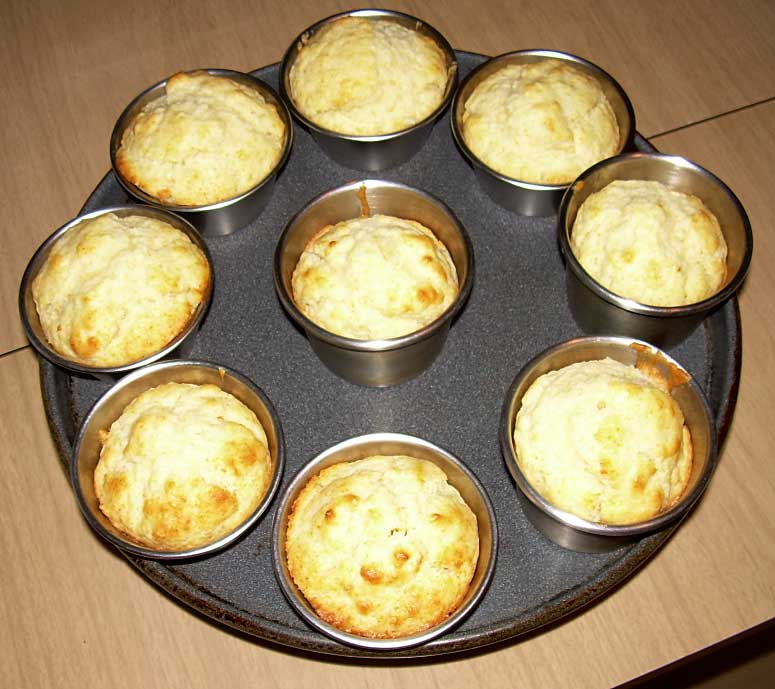
Coconut Muffins


As I mentioned before, I love coconut and decided some time ago that I'd like to give coconut muffins a try. Unfortunately, the recipes I'd tried up to this point turned out relatively poorly. Since unsweetened coconut is expensive and hard to find in Tokyo, this is pretty annoying since it wastes it.

After some experimenting, I finally came up with a low sugar muffin which has great texture. If you're in Japan, you can get unsweetened flaked coconut through Tengu Natrual Foods and granular Splenda from the Foreign Buyer's Club. If you're in the U.S., you can probably truck on over to your local market. :-p

If you live in Japan but don't have muffin cups, you can buy them at a branch of Tokyu Hands relatively cheaply.

Here's the recipe:

1 cup shredded unsweetened coconut
2 cups white flour
1 T. baking powder
2 T. granulated sugar
1 cup granular Splenda
1 t. salt
1 T. honey
1 egg
1 cup milk
1/2 cup canola or vegetable oil

Mix the coconut, Splenda, sugar, baking powder, and salt in a large bowl. In a separate bowl, mix the honey, egg, milk, and oil. Add the wet ingredients to the dry, stirring until just mixed. The batter should be lumpy but the flour should be incorporated. Spray the bottoms only of muffin cups with non-stick spray (or use paper). Fill cups about 2/3 of the way with batter. Bake at 190 degrees C or 375 degrees F for 15 minutes.

By the way, the reason that you shouldn't overmix muffin batter is that it overworks the gluten in the flour and creates muffins with a tough texture and tunnels. This is less likely to happen with cake batter because there's a higher liquid content in it though, in general, it's a good idea never to overwork the batter or dough for anything containing flour except bread (which benefits from gluten development).

I toss these in a Ziploc bag and freeze them and thaw them as desired. They're great with a cup of tea in the morning or as a tea time treat. Yum!

Saturday, September 16, 2006

Banana "Lassi"


I enjoy the taste of yogurt but I'm actually not all that keen on eating it. There's something about the gloopy texture that doesn't sit well with me. I also know that there are a lot of health benefits to eating it that make it a desirable thing to include in one's diet.

The yogurt pictured above is bifidus yogurt and is found in almost all Japanese supermarkets. This particular type has no sugar and tends to be relatively cheap. A 500 gram container costs about 160 yen on sale and around 200-250 yen regularly. You can get 3-5 servings from one container depending on how hungry you are.

Bifidus yogurt contains beneficial bacteria which are supposed to aid in digestion. There is also evidence that it lowers cholesterol. However, this particular brand is not low fat. It lists 3% under fat in the nutrition information. Being yogurt though, it's not exactly calorie-packed. The entire container is 325 calories.

In order to avoid having to eat yogurt in its normal state, I mix it up with my Braun multiquick hand mixer into a lassi-style drink. A lassi, for those who haven't had much Indian food, is a yogurt drink traditionally made with water and spices such as cumin or turmeric. Mango is sometimes used in such drinks but I prefer bananas because they are easier to get, cheaper, and far quicker to prepare.

Here's the recipe:

1 medium banana
3-4 heaping tablespoons yogurt
1/2 tsp. cinnamon
dash or two of vanilla essence
1 cup low fat or skim milk (use more or less to taste)
1-2 packets of artificial sweetener (optional)

Blend with a hand mixer or blender until smooth.

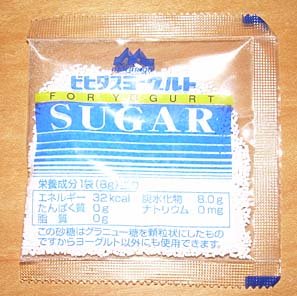
The Morinaga bifidus yogurt comes with a little packet of sugar which you can choose to use to sweeten it. The crystals are large and look like small pellets. They resemble the confetti that you put on top of cupcakes. I'm not sure what is done to sugar to make it look like this but it's got to have some sort of funky artificial enhancement going on.

I've never actually used these packets because the reason I go out of my way to find sugar-free yogurt is to, well, avoid the sugar.

This drink makes an excellent, fast and cheap breakfast. Throwing one together takes about 5 minutes and the cost is about 100 yen per serving. At the very least, you can drink it with a piece of toast for breakfast to increase the nutritional value of your morning meal.

Wednesday, August 30, 2006

Cocoa Frappucino

Summer in Japan usually has everyone breaking out the mugicha (that's barley tea for those who aren't living in Japan) but I've never been a fan of any of the cold Japanese teas. I find them all roughly inoffensive and mugicha would actually be my favored cold tea among what I consider the 3 "biggies" - mugicha, oolong tea, and ju-rokucha (a blend of 16 ingredients in an herbal tea) but I pretty much prefer western drinks.

When I get tired of diet sodas and want something with more frost to it, I turn to a frappucino. Since Starbucks is a fair distance away and their frappucinos are full of sugar, I wanted to work out how to make one on my own. I'm sure this is a lot easier to accomplish back home than in Japan because crushed ice machines aren't commonly included with refrigerators here as they are in the U.S.

The first step is getting the equipment which isn't all that hard if you can locate a blender which is powerful enough to crush ice. I've had really bad luck with blenders burning out on me after short-term use though. So, I decided to order the ice crusher/blender attachment for my Braun Multiquick hand mixer. The good folks at Yodobashi will order all sorts of extras for you if you tell them the part number and the attachment is listed in the back of the Multiquick manual.

The Multiquick mixer unit along with a whisk attachment and a small food processor bowl can be purchased at Costco in Japan or at Amazon Japan for about 6,000-8,000 yen. I can't recommend this mixer enough for its various uses and small size. It beats my old small food processor hands down and makes a mean smoothie.

For a low-fat,sugar-free chocolate frappucino, the ingredients are:

1/2 cup low-fat milk
1 tablespoon (soluble) cocoa powder (Van Houten is very good and sold at Costco and some Japanese supermarkets)
1 tablespoon low-fat powdered milk
1 teaspoon of pectin (sold in supermarkets near the gelatin under the katakana letters - pe-ku-chi-n)
3 packets of sweetener (I use Splenda purchased from the Foreign Buyer's Club)
dash of vanilla extract
dash of cinnamon
about 1 cup of crushed ice (about 6-8 Japanese cubes)

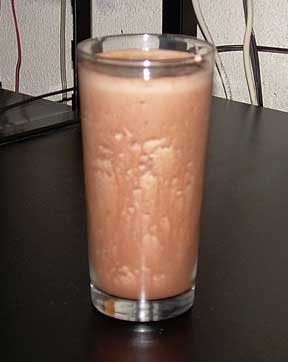
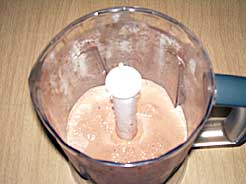
Put all of the ingredients except the ice into the blender and blend until it is mixed well. You should probably mix it for between 30 seconds to a minute to try and get the cocoa to dissolve and the pectin to thicken. Add the crushed ice and blend again for from 30 seconds to a minute until it resembles melted chocolate ice cream from the top (see picture below).


You can vary this recipe to make a coffee frappucino but be careful not to overdo the liquid relative to the ice quantity or all the ice will dissolve into the coffee and leave you with a coffee shake drink. Make sure you keep the ratio of liquid to ice the same (a half cup of liquid ingredients to a cup of ice). Also, make sure your coffee is very cold and strong if you use espresso and ditch the powdered milk but keep the pectin. In fact, I recommend you use 2 measures of ground coffee to one measure of water in your espresso machine to make it very, very strong and then use 1/4 cup of full fat milk and 1/4 cup of espresso as the 1/2 cup of liquid. Alternately, you could try the recipe above and substitute instant coffee for the cocoa powder although perhaps reducing the quantity.

All of these ingredients can be found in Japan relatively easily, particularly if you are flexible about brands. The hardest to find item at regular supermarkets like Seiyu or Ito Yokado is pectin. It is probably only carried by about 1 in 4 markets so you'll have to hunt around.

If you're on a diet and dying for something with chocolate, this will likely satisfy you with a very low caloric hit (about 70-100 calories depending on the milk type) and it's full of water so you feel full after drinking it.